


.jpg)


Wondering how to manage a gym without living at the front desk? It comes down to six repeatable areas: member experience, your team, daily operations, the money, retention, and marketing, run on a steady rhythm instead of managed by crisis. Master those and the rest is detail. In this guide, you'll get the six essentials, a simple daily-to-quarterly operating rhythm, and real numbers from owners who turned chaotic admin into a business that runs itself.
What does managing a gym actually involve?
Managing a gym means running six connected areas: designing the member experience, building and leading a team, keeping daily operations (bookings, payments, scheduling) running smoothly, managing money and metrics, retaining members through community and programming, and marketing consistently. Each area comes down to one or two numbers you can watch without a spreadsheet.
How to manage a gym day to day with 6 essentials
1. Design the member experience instead of leaving it to chance
Your member experience starts before someone walks in and matters most in their first 30 days. Map it deliberately: how someone finds you, books a trial, gets welcomed on day one, and what happens in weeks two, three, and four. Then ask for feedback on a schedule, not only when something goes wrong. The physical experience counts too: a clean floor and well-maintained equipment tell members you take their training as seriously as they do. Members who feel looked after early are the ones still with you a year later.
2. Build a team that runs without you
You can't scale a gym you personally hold together. Hire for service, train for standards: certified coaches who genuinely care, and front-of-house people who make members feel known. Then document how things are done (opening checklists, class cover, complaint handling) so any team member can act without waiting for you. Our guide to building and maintaining a winning studio team goes deeper on hiring and keeping great people.
3. Put routine admin on autopilot
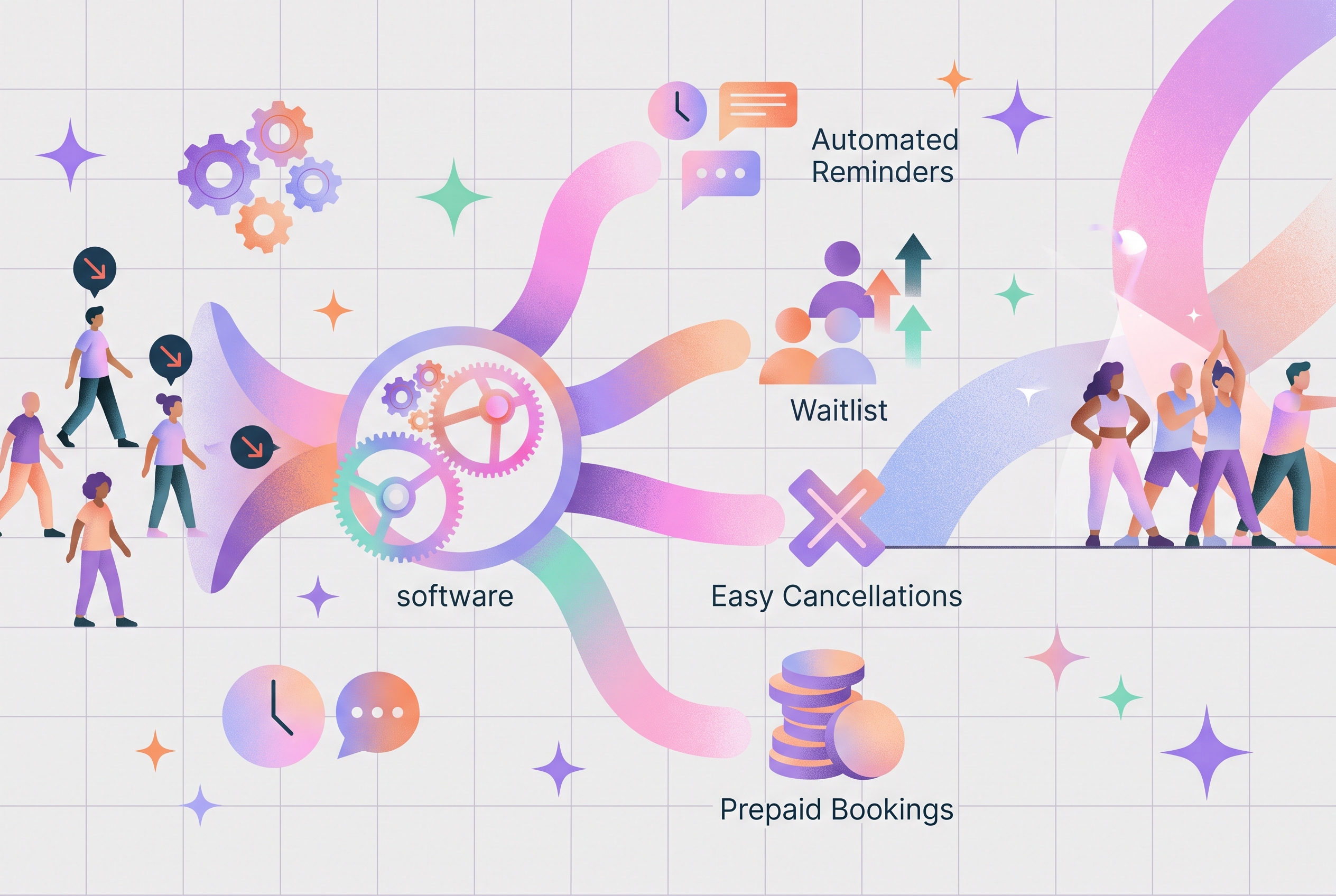
Manual admin is where gym managers lose their weeks: chasing payments, taking bookings by message, reconciling a paper diary. Move it all into one platform (self-service bookings, automatic payment collection, one timetable) and those hours come back. The test is simple: if a task happens the same way every week, a system should be doing it, not you.
4. Run the money on real numbers
Gut feel doesn't set prices or spot a slow leak in revenue. Watch a short list of metrics (monthly recurring revenue, churn, average revenue per client) and review them monthly. Price from your costs and capacity, not from the gym down the street. Our breakdown of the financial metrics gym and studio owners need to track covers each number and how to improve it.
5. Make retention a system, not a hope
Keeping a member is generally far cheaper than winning a new one, and attendance is your early-warning system: a member whose visits drop is often weeks from canceling. Watch attendance, reach out personally when it dips, and invest in the community side (events, challenges, milestones) that makes leaving feel like losing something. For specific plays, see our top client retention strategies.
6. Market on a schedule, not in a panic
The gyms that grow steadily market steadily: a referral program that's always on, a Google Business Profile that's current, and one social channel done consistently rather than four done occasionally. Marketing belongs inside your operations, not bolted on when membership dips. Our guide to marketing for gyms made simple lays out the full playbook.
A simple gym management rhythm
Good management is mostly cadence. Here's a rhythm that keeps all six areas moving without consuming your week:
What does good gym management look like in practice?
These are real, first-party results from owners who systemized how they manage, all verified in their own case studies:
None of these owners found a magic trick; they fixed the system underneath the business. Paul Taylor of Strength Clinic Dundrum ran his coaching diary with a pen for ten years; two years after automating his admin and starting to track his numbers, he puts it plainly: "I have become a much more professional business owner, in tune with numbers."
Do you need software to manage a gym?
You can manage a small client list manually, but every area above gets easier, and several become automatic, with the right platform underneath. Look for:
- Self-service bookings and automatic payments: the two biggest weekly time drains, gone.
- One system for everything: memberships, scheduling, programming, and reporting in one place, not four apps.
- Numbers without effort: revenue, attendance, and churn calculated for you.
- Simplicity your members feel: if booking a class takes three taps, retention gets easier.
This is the job LegitFit does for thousands of gyms and studios: the admin runs itself, and the numbers you need to manage well come as a by-product. If you're evaluating options, our ultimate guide to picking a gym management software covers the decision step by step.
Frequently asked questions
What does a gym manager do every day?
On a typical day, a gym manager checks bookings and payments, handles member questions, supports coaches, and keeps classes running on time. The bigger jobs (reviewing revenue and churn, planning marketing, hiring) happen on a weekly, monthly, and quarterly rhythm rather than daily, especially once routine admin is automated.
Is it hard to manage a gym?
It's demanding, but much of the difficulty comes from juggling too many manual systems rather than from the work itself. Owners who document how things run, delegate clear responsibilities, and automate bookings and payments typically find the role shifts from constant firefighting to a manageable weekly rhythm.
What makes a gym successful?
Successful gyms tend to share the same fundamentals: a member experience that's deliberately designed, a reliable team, simple automated operations, pricing built on real numbers, a genuine community that keeps people coming back, and consistent marketing. No single tactic replaces running these six areas steadily, month after month.
What KPIs should you track when managing a gym?
Focus on a short list: monthly recurring revenue, churn rate, average revenue per client, class attendance, and lead-to-member conversion. Together they tell you if your management is working. Modern gym platforms calculate these automatically, so reviewing them takes minutes each month rather than a spreadsheet session.
How many staff do you need to manage a gym?
It depends on your size, model, and opening hours; there's no universal ratio. As a real example, DBK Fitness runs a 250-plus-member small group personal training gym with seven staff managed through one platform. Good systems and clear delegation matter more than headcount alone.
Do you need software to manage a gym?
Strictly speaking, no. Plenty of gyms started with pen and paper. But manual admin stops scaling quickly: payments need chasing, bookings clash, and the numbers live in your head. A gym management platform automates those tasks, which is why most growing gyms treat software as essential infrastructure.
Run the gym without it running you
Managing a gym well isn't about working more hours; it's about running six areas on a rhythm: experience, team, operations, money, retention, and marketing. Design the member experience, build a team that doesn't need you hourly, automate the admin, watch a short list of numbers, and market on a schedule. The owners in the table above prove the payoff: less firefighting, more growth.





.jpeg)


Helping fitness business from day one
Trusted by fitness professionals worldwide to simplify day-to-day management and accelerate fitness business growth with clear, proven results.
Get demo & pricing