




If you're researching how to start a pilates studio, you're probably an instructor who's ready to build something of your own, or an entrepreneur who has watched reformer classes sell out across town. Either way, the path is the same: choose your model, get the credentials and budget right, set up systems before opening day, and launch to a community you've already warmed up. Here's the whole path in eight steps, with real results from owners who've done it.
Is opening a pilates studio a good business?
For the right owner, yes. Pilates is one of the strongest corners of boutique fitness: clients pay premium rates for expert coaching, visit routinely rather than sporadically, and tend to stay for years once they're settled. It's also a discipline with unusually broad reach: the same schedule can serve athletes chasing performance, desk workers undoing their week, and clients training around injuries, which keeps demand steadier than trend-driven formats.
The honest caveats: equipment and rent make it a heavier launch than mat-based pilates concepts, margins vary with utilization and payroll, and profitability rarely arrives overnight. The eight steps below are designed to shorten that runway.
How to start a pilates studio in 8 steps
To start a pilates studio, choose your class model, get certified or hire certified instructors, write a plan, budget your startup costs, secure the right space, set premium pricing, put your booking and payment systems in place before opening day, and launch with local marketing. Each step below builds on the one before it.
Step 1. Choose your class model
Everything downstream, from budget to floor plan, follows this choice. Mat pilates is the cheapest to launch and serves more people per square foot. Reformer classes cost far more to equip but command premium prices and are driving much of the current demand. Hybrid studios mix both, often adding private sessions as a high-margin tier. Because everything else hangs on this decision, it's worth seeing the three paths side by side:
Think about who you're building the timetable for as well - early birds before work, parents mid-morning, and the after-office rush all book differently - and your model determines which of them you can serve profitably. Decide your core group size too: many boutique owners keep groups intimate on purpose, because coaching quality is the product clients are paying for.
Step 2. Get certified or hire people who are
You don't legally need a pilates certification to own a studio, but the teaching staff on your schedule do need to be credible, safe, and insurable. If you're an instructor, a comprehensive certification from a reputable program is your foundation. If you're coming from the business side, budget for experienced certified teachers early; in a coached discipline like pilates, your instructors are the product.
When you hire, audition every candidate with a real class rather than an interview alone; how a teacher cues, corrects, and connects in the room tells you more than any resume. Decide early how you'll structure the working relationship too, because employees and independent contractors carry different obligations which are worth checking with a local advisor.
Step 3. Write the business plan
Keep it short, specific, and numeric: your concept and target client, the local competition and your edge, projected costs and revenue, and the goals you'll measure yourself against in year one. A plan forces the pricing and capacity math before the lease does it for you. Include a launch section with a founding-member goal you can presell against, so opening day starts with revenue instead of hope. Then treat the document as a working tool you revisit each quarter, not a formality you file away. Our guide to writing a winning business plan for your fitness startup walks through every section.
Step 4. Budget your startup costs honestly
There's no universal number here: your class model, market, and space determine the budget, so build yours from real local quotes rather than someone else's averages. The lines that matter most are equipment (reformers especially), the fit-out, several months of rent up front, insurance, and a marketing fund for launch week. Gather two or three quotes for every major line, and read the lease with professional eyes before you sign; the terms you negotiate now will follow you for years. Whatever your total comes to, hold back a cash buffer; slow first quarters sink more studios than bad concepts do.
Step 5. Find a location that sells itself
Pilates clients tend to visit often, so convenience wins. Look for visibility, parking or transit access, and a neighborhood whose income and habits match a premium offer. Bigger isn't better: a boutique room that feels full and energetic beats a half-empty warehouse, and it costs less every single month. Visit shortlisted spaces at the hours you actually plan to teach, listen for noise, and check the ceilings, floors, and ventilation against the equipment you chose in step one. Neighbors matter too; a spot beside the coffee shop, physical therapist, or salon your future clients already visit does quiet marketing for you all year.
Step 6. Price for a premium experience
Underpricing is the classic new-studio mistake. You're selling coached, small-group sessions, not gym access, and your price should say so. Most studios build around a core recurring membership, supported by class packs, an intro offer that converts into the membership, and private sessions at the top. Design the intro offer to convert rather than to be cheap: a short, structured taste of the real experience beats an endless free trial, and it protects the value of your core membership. Work through the models in our guide to setting up a winning pricing strategy before you print a price list.
Step 7. Set up your systems before opening day
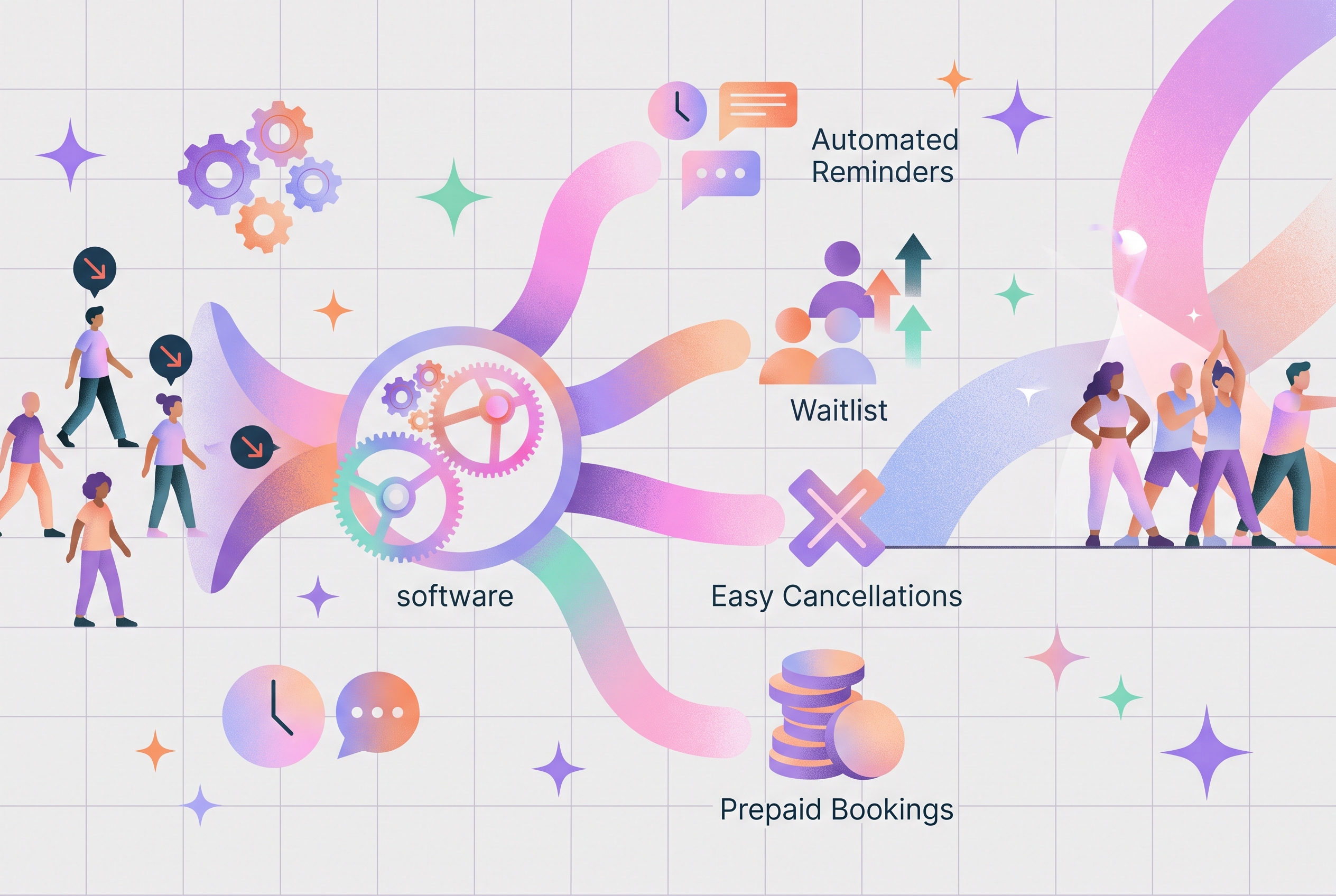
Here's the step most first-time owners leave too late. On launch week you'll be juggling class schedules, intro offers, waitlists, payments, and dozens of new names; if that lives in your phone and a spreadsheet, the chaos shows. Set up one management platform for your pilates studio before you open so clients book themselves in, payments collect automatically, and every class has a waitlist from day one.
The payoff is bigger than the saved admin: a clean booking experience is your first impression, and a waitlist that fills cancellations automatically protects revenue from week one. This is exactly what LegitFit does for pilates studios, and if you're comparing options, our ultimate guide to picking a pilates studio management software covers the decision step by step.
Step 8. Launch loud, then market on a rhythm
Start marketing before you open, not after. Build a founding-member list with a presale offer, seed reviews and a complete Google Business Profile so you win "pilates near me" searches, and show your space, teachers, and real clients on one social channel done consistently. Local search is the highest-intent channel you have; our playbook on dominating local search for gyms and studios shows you how to own it. Give the launch a moment people can actually attend: an open house, a free community class, or a founding-member evening, and ask every early client for a referral while the excitement is still real.
What a successful launch looks like
Two different concepts, one shared lesson: when booking a class takes seconds and payments run themselves, new businesses grow faster because the owner's energy goes into coaching and community, not admin.
Your first year after the doors open
Opening is the starting line. In year one, your job shifts to three numbers:
- Class utilization
- Monthly recurring revenue
- Retention
Watch attendance as an early-warning signal, follow up personally when a new client's visits dip, and build the community rituals that turn a schedule into a place people belong. This is also when your reporting starts paying for itself, because the numbers will tell you which classes to expand and which time slots to rethink long before gut feel does. When you're ready to go deeper, our guides to building a thriving pilates or yoga studio and client retention strategies pick up where this one ends.
From empty room to full reformers
Starting a pilates studio is a sequence, not a leap: a clear model, credible teaching, a plan with real numbers, an honest budget, the right room, premium pricing, systems that run themselves, and a launch your neighborhood hears about. Owners who get the boring foundations right before opening day spend year one building a community instead of untangling admin. Your first full reformer class is closer than it feels.
Frequently asked questions
How much does it cost to open a pilates studio?
Costs vary so widely by model, market, and space that no single figure is reliable. Equipment is usually the biggest line item, followed by fit-out, upfront rent, and insurance, so your class model heavily shapes the budget. Build yours from real local quotes before signing anything.
Do you need to be certified to open a pilates studio?
There is no federal certification requirement to own a studio, but every instructor teaching on your schedule should hold a reputable pilates qualification for safety, insurance, and credibility. Many owners are certified instructors themselves; others hire certified teachers and focus on running the business.
Is a pilates studio profitable?
It can be. Pilates studios charge premium rates for coached sessions, and industry sources cite a wide range of profit margins depending on utilization, rent, and payroll. Profitability usually comes down to filling classes consistently, keeping clients long term, and controlling your two biggest costs, space and staff.
How long does it take for a pilates studio to become profitable?
There's no fixed timeline; it depends on your market, rent, payroll, and how strong your launch is. Studios that open with a presold founding membership and systems already in place tend to reach consistent profitability sooner than those that build the business after the doors open.
Should you start with mat or reformer pilates?
Mat classes are far cheaper to launch and serve more people per square foot, while reformer classes command higher prices and strong demand in many markets. Plenty of owners start with mats plus a few reformers, then reinvest revenue into more equipment as classes fill.
What software does a pilates studio need to open?
From day one you'll want self-service class bookings, automatic recurring payments, waitlists, client communication, and simple reporting. Setting up one platform before launch is far easier than untangling spreadsheets later, and it makes your studio look professional from the very first booking.





.jpeg)

.jpg)


Helping fitness business from day one
Trusted by fitness professionals worldwide to simplify day-to-day management and accelerate fitness business growth with clear, proven results.
Get demo & pricing