


How to grow and build a boutique gym when you already run one
.jpeg)

Most advice on how to grow and build a boutique gym is written for people who haven't opened one yet. This guide is for you: the owner already running classes, already holding a community together, and wondering what gets you to the next stage. The short answer is seven levers: a sharper niche, premium pricing, retention, class utilization, rhythmic marketing, systems, and data-led expansion. Let's work through each one.
What makes a gym "boutique" (and why that's your advantage)
A boutique gym is a smaller, specialized studio built around one experience done exceptionally well: pilates, strength, HIIT, boxing, small group training. Members pay a premium for coaching, community, and brand rather than for square footage. That intimacy is your moat; it's the one thing a big-box gym cannot copy at scale.
It's also a growing corner of the industry. Market researchers have valued boutique fitness in the tens of billions of dollars and generally expect it to keep expanding. The opportunity is real, but so is the competition, which is why growth has to be deliberate.
How to grow and build a boutique gym with 7 growth levers
To grow and build a boutique gym, strengthen what you already have before adding anything new: sharpen your niche, price for the experience you deliver, keep the members you win, fill the classes you already run, market on a steady rhythm, automate the admin, and let your numbers choose the next move.
1. Sharpen the niche and brand you already have
You built the studio around something. Growth starts by making that something unmistakable. Run a quick audit: could a stranger say in one sentence what you do, for whom, and why it beats the gym down the street? If not, tighten it. Say no to being everything: the boutique studios that grow fastest tend to narrow their promise, not widen it, because a specific promise is what members repeat to their friends.
2. Price for the experience, not the market average
Underpricing is one of the most common ways established studios stall. You're not selling access; you're selling coached results in a room where people know your name. As an illustrative example, moving 100 members from $120 to $135 per month adds $18,000 a year with zero new members. Raise with notice, grandfather thoughtfully, and anchor the price to outcomes. Our guide to setting up a winning pricing strategy walks through models and tiers in detail.
3. Turn retention into the growth engine
Keeping a member is generally far cheaper than winning a new one, and in a boutique setting retention is also your best marketing: long-term members are the ones who bring friends. Watch attendance as your early-warning signal, reach out personally when visits dip, and invest in the moments that bond people to the room: milestones, challenges, community events. For concrete plays, see our top client retention strategies.
4. Fill the classes you already run
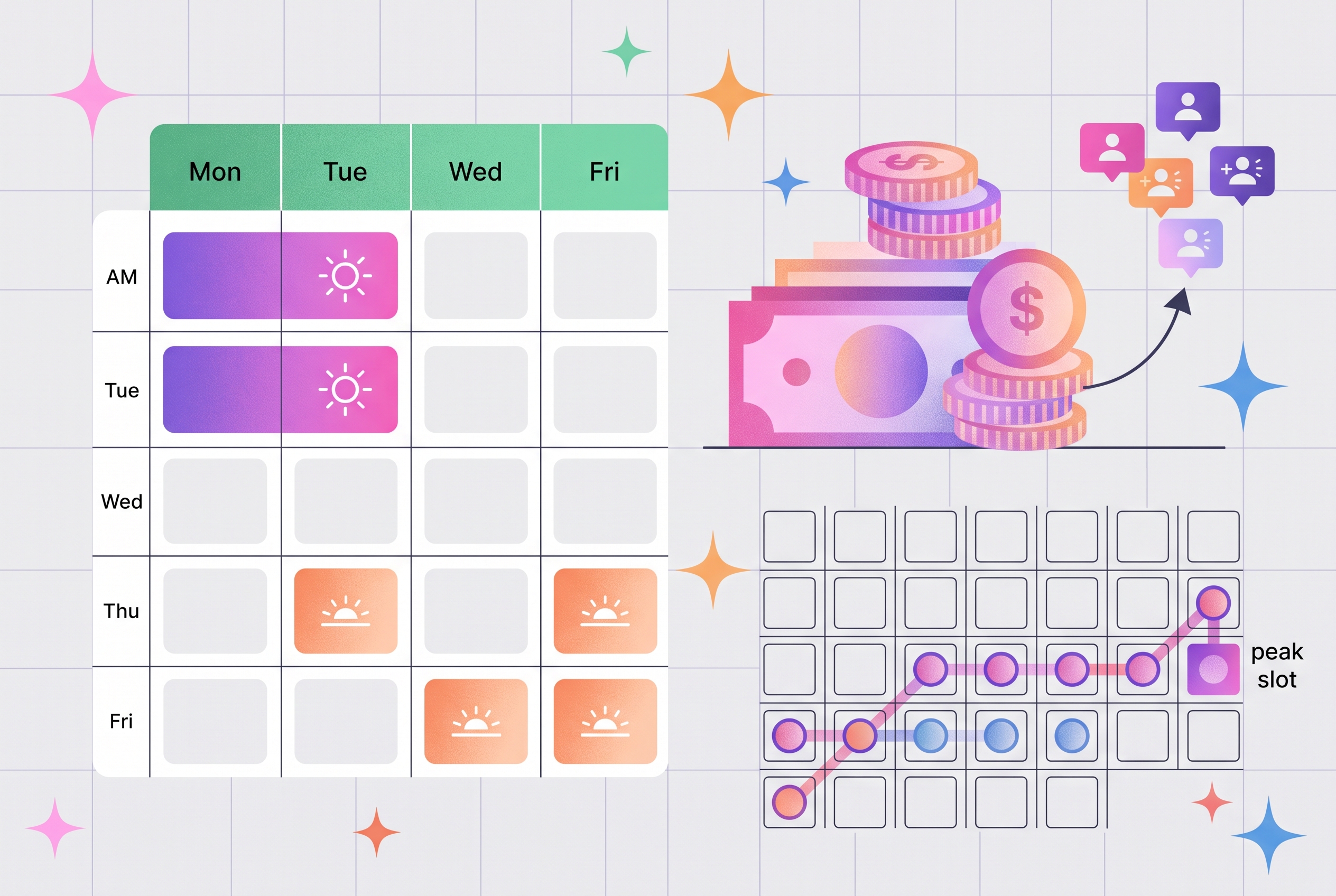
Before you add classes, coaches, or square footage, squeeze the timetable you have. A class that runs at 50% capacity costs you the same coaching hour as a full one. Check utilization by time slot, move or merge chronic underperformers, and let waitlists redistribute demand to quieter sessions. For example, lifting average class fill from 6 to 9 people at $18 a head adds $54 of revenue per class hour without a single new cost.
5. Market on a rhythm of referrals, local search, and social proof
Boutique gyms rarely grow from ad spend; they grow from compounding trust. Put three channels on a schedule and keep them running: a referral program that never switches off, because your members' friends are your warmest leads; a current Google Business Profile with fresh reviews, because "pilates near me" is won or lost there; and one social channel done consistently, showing real members and real results. The full sequence is in the gym marketing playbook.
6. Systemize the admin so growth doesn't break you
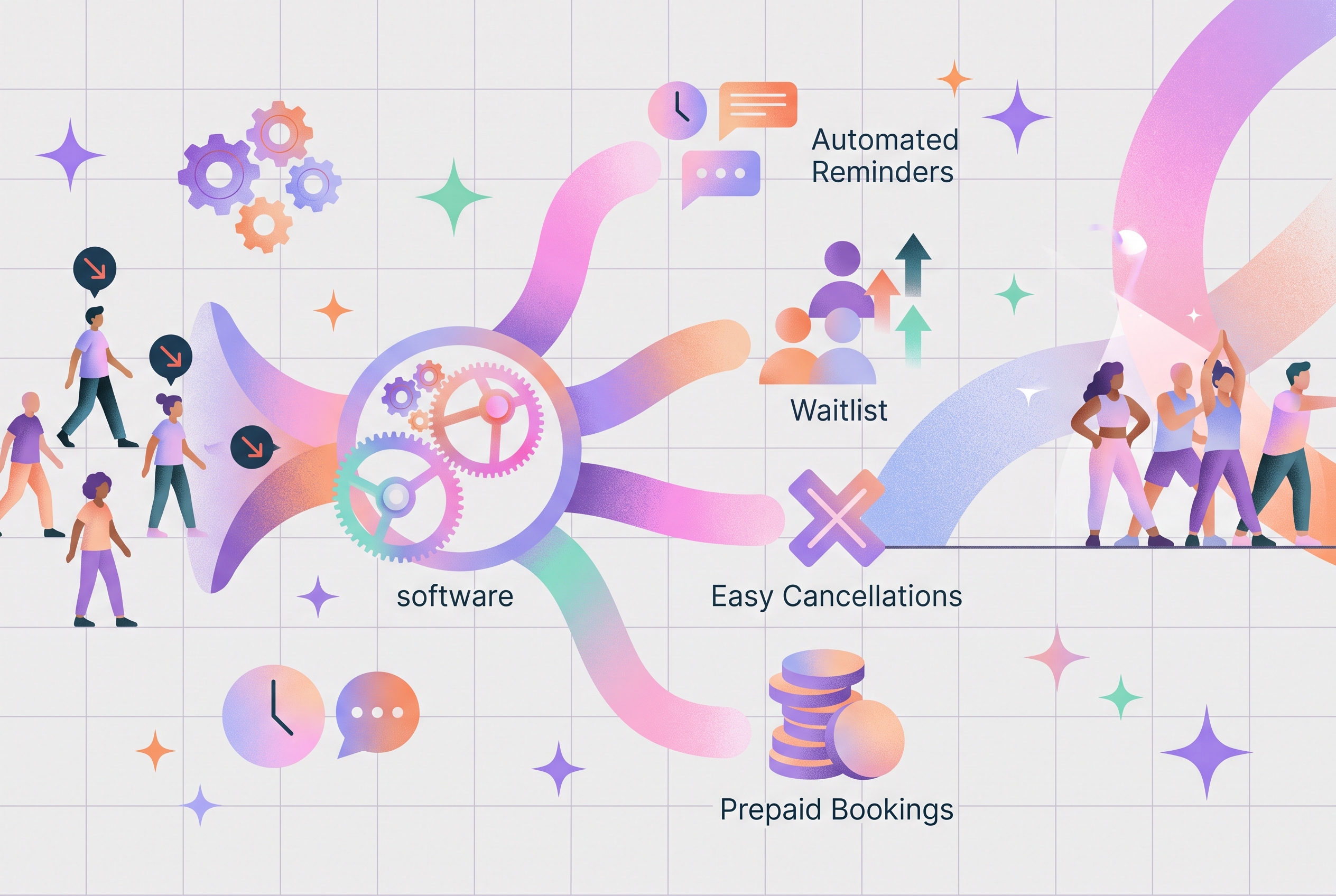
Every lever above produces more bookings, more payments, and more member conversations. If those run through your phone and a spreadsheet, growth just means more evenings lost to admin. One management platform should handle self-service bookings, automatic recurring payments, waitlists, and reporting; this is exactly what LegitFit does for boutique studios and gyms, so the operational side of growth runs itself while you coach.
7. Let the numbers pick your next move
Growth decisions get easy when three or four numbers are always in view: monthly recurring revenue, churn, average revenue per member, and class utilization. Review them monthly and act on the biggest gap. A full breakdown of what to track lives in our guide to the financial metrics gym and studio owners need to track.
What growth actually looks like in real studios
These are verified, first-party results from boutique businesses that pulled the levers above, each linked to its full story:
Notice what's missing from that table: none of them grew by discounting, and none started with a second location. They fixed the foundations, and the growth followed.
When should you expand?
Expansion is lever seven for a reason. A second location, a bigger space, or a new format multiplies whatever you have, including the problems. You're likely ready when:
- Demand is overflowing: prime-time classes are consistently full, with real waitlists.
- Retention is stable: members stay, so growth isn't leaking out the back door.
- The studio runs without you daily: your team and systems, not your presence, hold the standard.
- Your playbook is written down: onboarding, class delivery, and admin would transfer to a new site as-is.
If those aren't true yet, the cheaper growth is still inside your current four walls: more utilization, better pricing, stronger retention. For the longer-horizon view, see our guide to sustainable growth strategies for fitness businesses.
Your studio's next chapter
You've already done the hard part: built a room people love training in. Growing and building a boutique gym from here is about compounding that asset: a sharper promise, prices that match the experience, members who stay and bring friends, full classes, steady marketing, systems that scale, and numbers that tell you when it's time for site two. Pick the lever with the biggest gap and start there this month.






.jpg)


Helping fitness business from day one
Trusted by fitness professionals worldwide to simplify day-to-day management and accelerate fitness business growth with clear, proven results.
Get demo & pricing