


1-on-1 Personal Training vs Small Group Classes (Pros, Cons & Which to Offer)


1-on-1 personal training gives your clients the most individual attention and the fastest tailored progress, but it costs the most and it's capped by the clock. Small group classes are more affordable, more social and far more scalable, with a little less one-to-one focus. So when it comes to 1-on-1 personal training vs small group classes, there's no single winner; the right choice depends on the client's goals and your business model. This guide breaks down the pros and cons of each, puts them side by side, and helps you decide which to offer (or to offer both). We'll also look at cost, where large group classes fit, and what actually happened when real gyms switched from one model to the other.
What's the difference between 1-on-1 personal training and small group classes?
1-on-1 personal training is one coach working with one client on a fully bespoke program. Small group classes, also called small group personal training (SGPT) or semi-private training, put one coach with roughly three to ten clients, following a program that's still scaled and tracked for each person.
The key thing to note: small group classes aren't the same as a big drop-in group fitness class. In a small group, the coach still knows your name, corrects your form and adjusts the session to you. It sits neatly between 1-on-1 and a large class.
1-on-1 personal training vs small group classes side by side
Here's how they stack up at a glance, with large group fitness classes added as a third point of reference, for both the client and your business.
Where do large group fitness classes fit in?
Since the keyword here is "classes," it's worth being clear on the difference. A large group fitness class (think a busy spin, HIIT or bootcamp session) is led at one pace for 15 or more people, with little individual attention. It's the most affordable and the most scalable option, and the energy can be brilliant, but the coaching is generic rather than tailored to you.
Small group classes are the middle ground: small enough that the coach still scales the session to each person, but social and affordable in a way one-to-one isn't. For that reason, this guide focuses on the two options most people are actually weighing up: true 1-on-1 personal training and small group classes.
The pros and cons of 1-on-1 personal training
One-to-one is the gold standard for individual attention. Here's where it shines, and where it holds you back.
Pros
- Fully personalized. Every session is built around one person's goals, level and preferences.
- Constant form correction. The coach watches every rep, which means better technique and lower injury risk.
- Fastest tailored progress. With undivided attention, clients get to specific goals quickly.
- Flexible scheduling. Sessions can flex around the client's diary.
- Best for injuries and special cases. Rehab, conditions and very specific goals are easier to manage one-to-one.
Cons
- The most expensive option for clients. They're paying for the coach's full hour.
- Capped by the clock for your business. One coach, one payer means income per hour has a ceiling.
- No group energy. Some clients miss the motivation and social side of training with others.
- It can feel intense. Constant one-to-one focus isn't every client's preference.
The pros and cons of small group classes
Small group classes trade a little individual focus for community, affordability and scale. Here's the balance.
Pros
- More affordable. The cost of the session is shared, so more people can access proper coaching.
- Community and motivation. Training alongside others builds camaraderie and makes showing up easier.
- Still personal. Coaches scale exercises and correct form for each member, so no one gets lost.
- Better economics and scale for your business. One coach earns from several members at once.
- Less intimidating for beginners. A supportive group can be the reason a nervous newcomer sticks around.
Cons
- Less individual attention than 1-on-1. The coach's focus is split across the group.
- Mixed abilities to manage. A range of levels in one session takes skilled programming and scaling.
- Set class times. Members fit into a timetable rather than a fully flexible slot.
- Not ideal for highly specialized goals. Serious rehab or elite, sport-specific work is usually better one-to-one.
What about the cost? A quick example
Cost is usually the deciding factor, so it helps to see it in numbers. Take one hour of a coach's time. Sold as a one-to-one session, a single client might pay $45 for that hour. Run as a small group of six, each member might pay $15 (a third of the price) while the coach earns more for the same hour on the floor. That's the heart of the trade-off: 1-on-1 costs the client more for undivided attention, while a small group spreads the cost and lifts your revenue per coaching hour. (These are illustrative figures to show the trade-off; your own pricing will depend on your market and costs.)
Should you offer 1-on-1, small group, or both?
If you run a gym or studio, the real question isn't which is "better"; it's which fits your clients and your goals.
- Lead with 1-on-1 if you specialize in rehab, athletic or highly bespoke work, or you're just starting out solo and building a reputation.
- Lead with small group if you want to grow revenue and retention, build a community, and make quality coaching accessible to more members at a friendlier price.
Why not both? For many businesses, the strongest model is offering 1-on-1 as a premium or onboarding tier and small group classes as the scalable core. New members can start with a one-to-one assessment, then move into small groups for affordable, recurring, community-driven training, while high-touch clients keep their private sessions. It's the best of both worlds, and it gives you more than one way to earn. (For help pricing tiers like this, see our guide to setting up a winning pricing strategy, and our breakdown of the benefits of small group training in business.)
In practice, a hybrid week might look like this: a new member books a single one-to-one session to set goals and learn the key movements, then trains in small groups three mornings a week at a membership price, dropping back into the occasional private session when they want focused attention on a lift or a niggle. You capture the premium value of 1-on-1 where it matters, and the steady, scalable revenue of small group everywhere else.
Offering both without doubling your admin
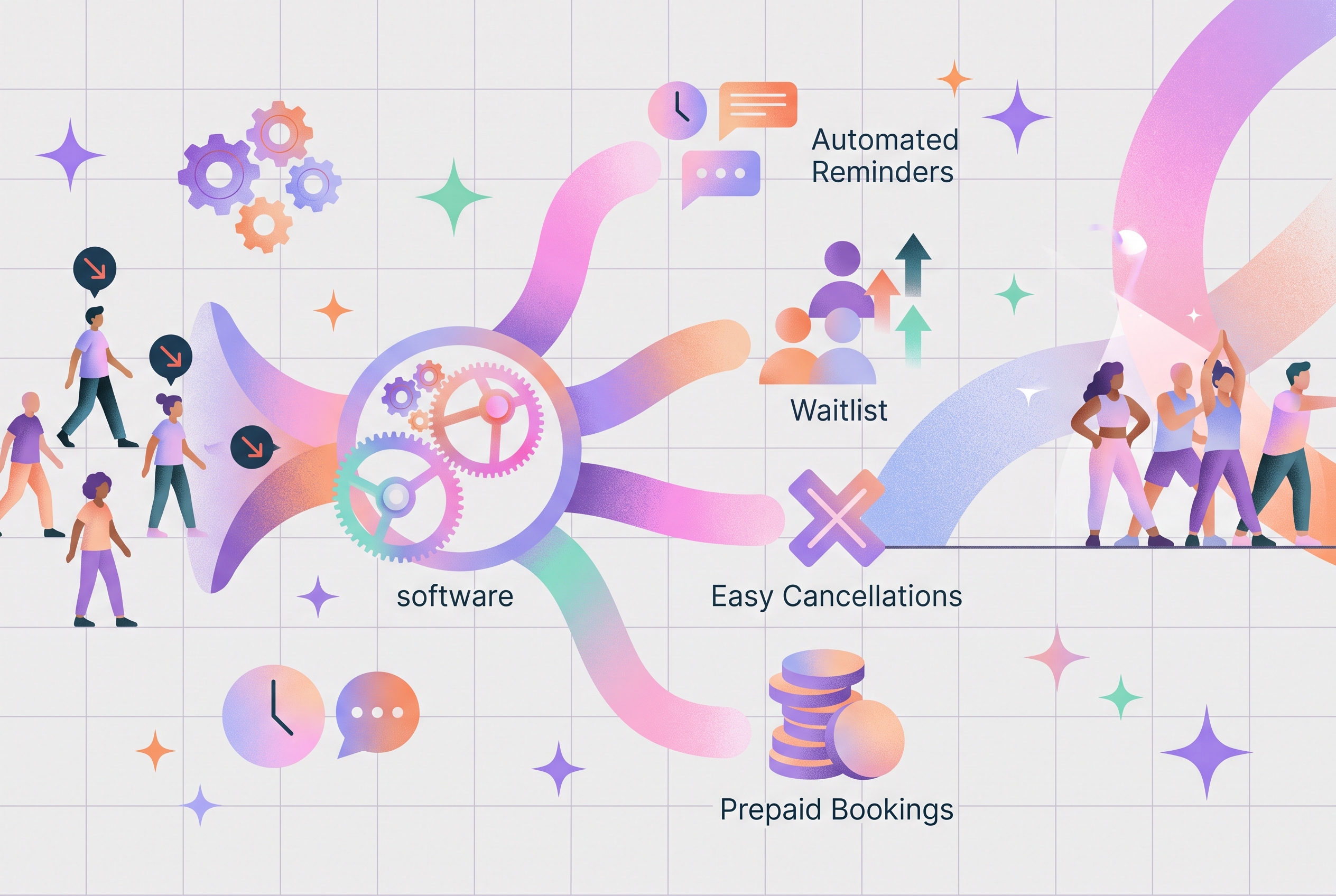
Running 1-on-1 and small group side by side means more timetables, bookings, capacities and payments to keep on top of. Different session types often come with different booking rules, capacities and payment structures, and juggling them across separate tools is where mistakes and no-shows creep in. The trick is to manage it all in one place, so adding a second model doesn't mean twice the admin. A good platform handles bookings and waitlists, recurring memberships, class capacity and programming for both your private sessions and your small groups, which is exactly what LegitFit is built to do. You can see how the platform supports SGPT and personal training businesses specifically.
Frequently asked questions
Is small group training better than 1-on-1 personal training?
Neither is universally better. 1-on-1 gives the most individual attention and the fastest tailored progress; small group classes offer community, a lower price and better scalability with slightly less individual focus. The right choice depends on the client's goals and your business model.
Is personal training worth it compared to group classes?
For fully bespoke programming, close form correction, rehab or very specific goals, 1-on-1 personal training is worth the premium. If cost, motivation and a social environment matter more, small group classes often deliver excellent results for less.
Which is cheaper, personal training or small group classes?
Small group classes are almost always cheaper for the client, because the cost of the coach's hour is shared across several members. 1-on-1 personal training is the most expensive option because one client pays for the coach's full attention.
What's the difference between small group classes and a group fitness class?
Small group classes (or small group personal training) coach three to ten people with individually scaled, tracked programming. A group fitness class is larger, often drop-in, and led at one pace with little individual attention.
Can you offer both personal training and small group classes?
Yes, and many gyms do. Offering 1-on-1 as a premium or onboarding tier alongside small group classes as your scalable core lets you serve high-touch clients and grow recurring revenue at the same time.
Is 1-on-1 or small group better for beginners?
Both work. 1-on-1 suits beginners who want undivided attention or are managing an injury; small group classes suit beginners who find the gym intimidating and are motivated by a supportive, social environment at a lower price.
Do small group classes get the same results as personal training?
They can, for most everyday goals. With programming that's scaled to each member, small group classes drive strength, fitness and fat-loss results while adding accountability and community. Very specific rehab or elite performance goals are usually still better suited to 1-on-1 personal training.
Two models, one decision
1-on-1 personal training and small group classes aren't really rivals; they're two tools for two jobs. One-to-one is unmatched for bespoke, high-touch coaching; small group classes win on community, affordability and scale. Match the model to your client's goals and your business, and remember that offering both is often the smartest move of all.
Want to learn more? LegitFit helps fitness businesses reduce admin, increase revenue, and build stronger communities. Ready to grow your business?




.jpeg)

.jpg)

Helping fitness business from day one
Trusted by fitness professionals worldwide to simplify day-to-day management and accelerate fitness business growth with clear, proven results.
Get demo & pricing